




Emergency Smile in 2025: a year in review
Lately, it can feel hard to hold on to hope. When the news is filled with stories of conflict, displacement, and loss, the weight of it all settles quietly but heavily. We feel it too—in the places we work, in the people we meet and sometimes in ourselves. That’s why we often return to the words of Jane Goodall: ‘The greatest danger to our planet is that we lose hope.’ Because without hope, the work we do at Emergency Smile simply wouldn’t be possible.
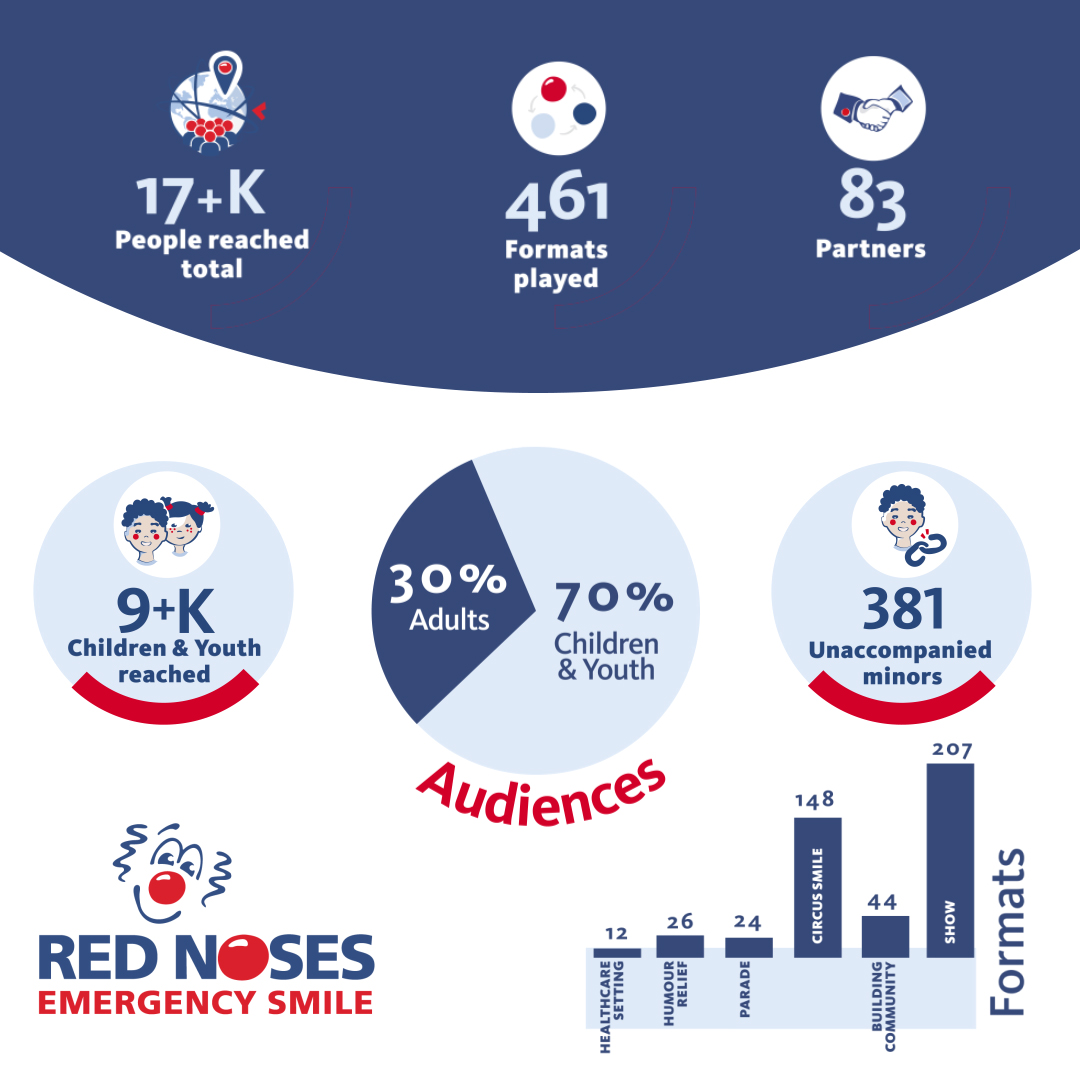
In 2025, our teams carried the art of clowning into shelters, camps and community spaces, reaching 17,746 people alongside more than 83 incredible partner organisations. Through 461 different artistic interventions, we offered moments of psychosocial support to people living through forced displacement. On paper, these numbers tell one story.
But numbers are never the whole story. What stays with us are the small, human moments. These encounters are what give meaning to every journey we take and every smile we share.
Ukraine
As the war in Ukraine continued, Emergency Smile returned to assess needs and deliver psychosocial support through healthcare clowning. Following a scouting mission, the team implemented a month-long intervention in the Zakarpattia region, working with displaced children and families. The performances focused on creating structured opportunities for play, emotional expression, and social interaction. All these are key elements to support wellbeing in contexts of prolonged stress and displacement.
During the first mission in Ukraine, a moment illustrated this impact clearly. At an orphanage, a teenage girl volunteered to translate for the team. Caregivers later shared that she rarely participates in group activities, yet during the performance she remained engaged and took an active role. Her involvement demonstrated how creative, relational interventions can encourage participation, agency, and connection, even among children who typically withdraw.
 Enlarge photo
Emergency Smile scouting mission in Ukraine 2025
Egypt
In Egypt, Emergency Smile conducted two rapid-response missions. The interventions focused on supporting emotional regulation through brief, interactive healthcare clowning performances for children, alongside Humour Relief Workshops for aid workers.
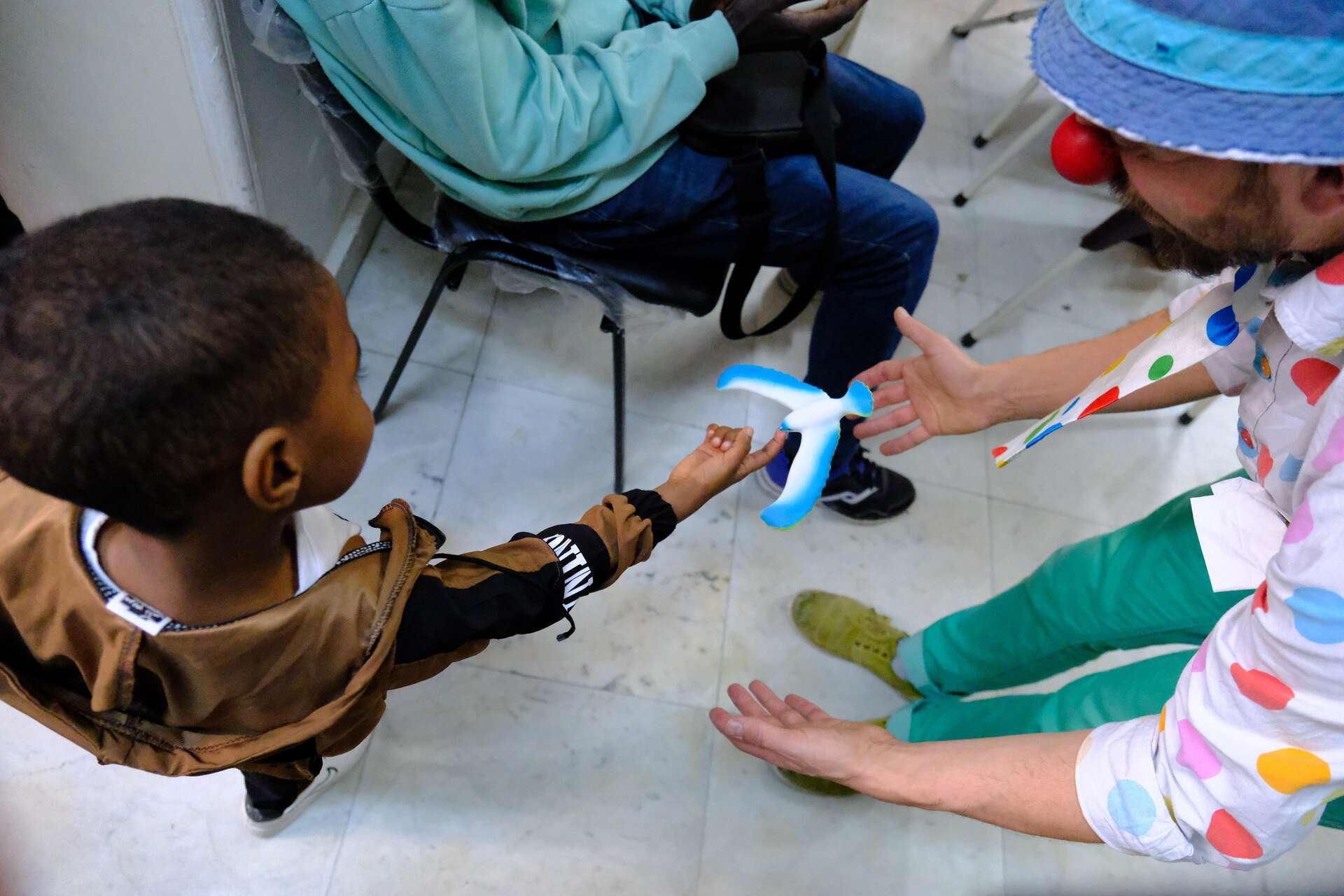
One intervention took place on World Children’s Day, during our second mission in Egypt, at a reception centre, where children and their parents—many from Sudan—were waiting for documentation. This setting is typically characterised by long waiting times, with families often lining up from as early as 2 a.m., frequently with small children, or even babies. Within this context, the performances supported positive engagement for children during the wait and helped relieve pressure on parents as they cared for them.
Ghaith Jawish from UNHCR’s Community-Based Protection team observed the immediate effect of the intervention:
‘Here at the reception centre we never see people smiling like this, not even the staff.’
 Enlarge photo
Emergency Smile first mission in Egypt 2025 during activities with Sudanese children
Bulgaria
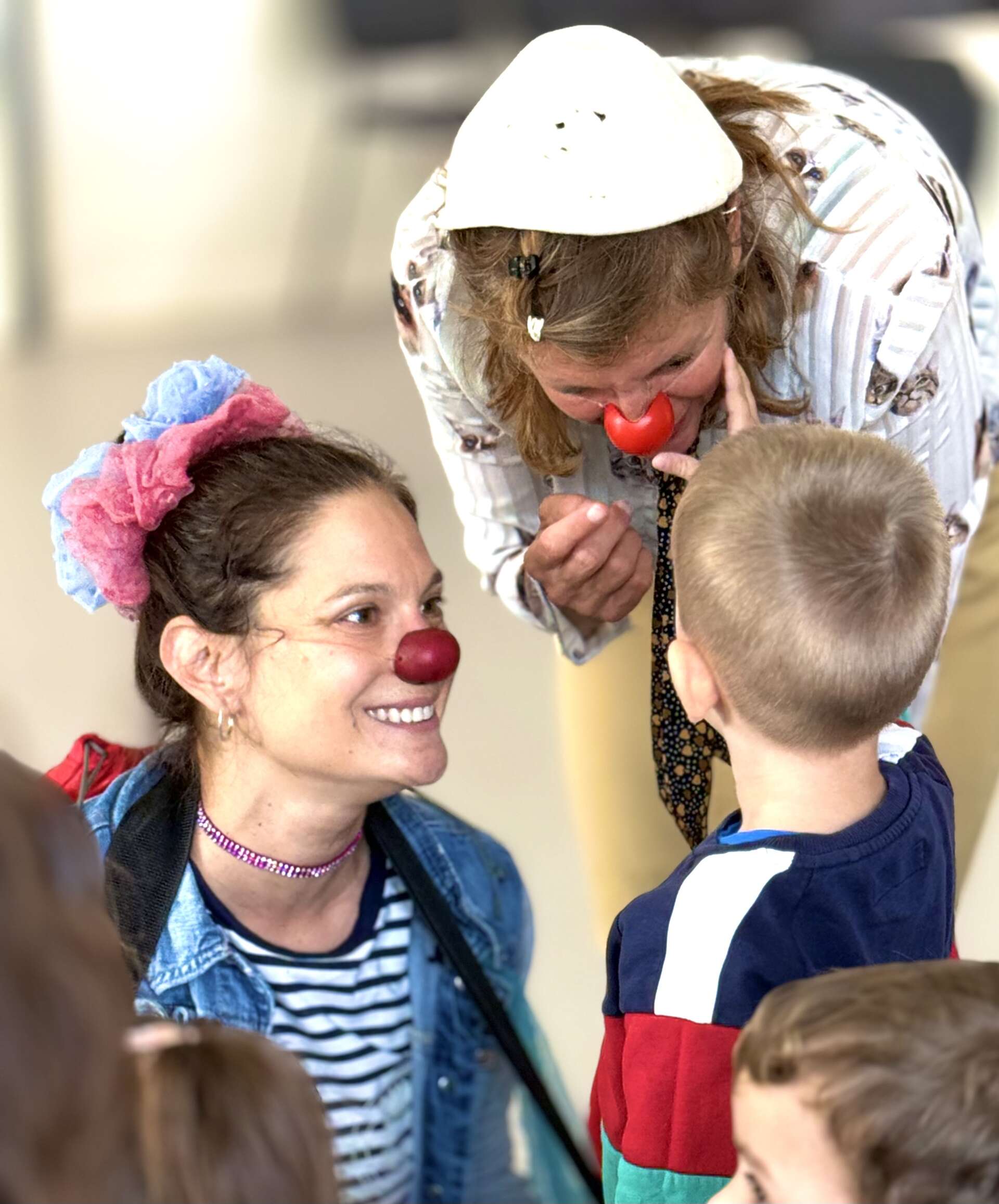
In 2025, Emergency Smile carried out its first intervention in Bulgaria, followed by two full missions. Working in partnership with local organisations supporting displaced populations, the teams focused on providing continuity of psychosocial support for children who have experienced repeated displacement.
Initial exploratory activities developed into ongoing collaboration, enabling Emergency Smile to reach communities with limited access to child-focused psychosocial interventions.
During the first intervention, the team partnered with the Council for Refugee Women in Bulgaria to deliver a session for 20 Arabic-speaking children. Following the activity, one mother reported that her three-year-old son, who is usually minimally verbal, began speaking more openly immediately after the session, highlighting the potential of structured, relational play to support communication and engagement in young children.
 Enlarge photo
Emergency Smile in Bulgaria during activities with Ukrainian children
Greece
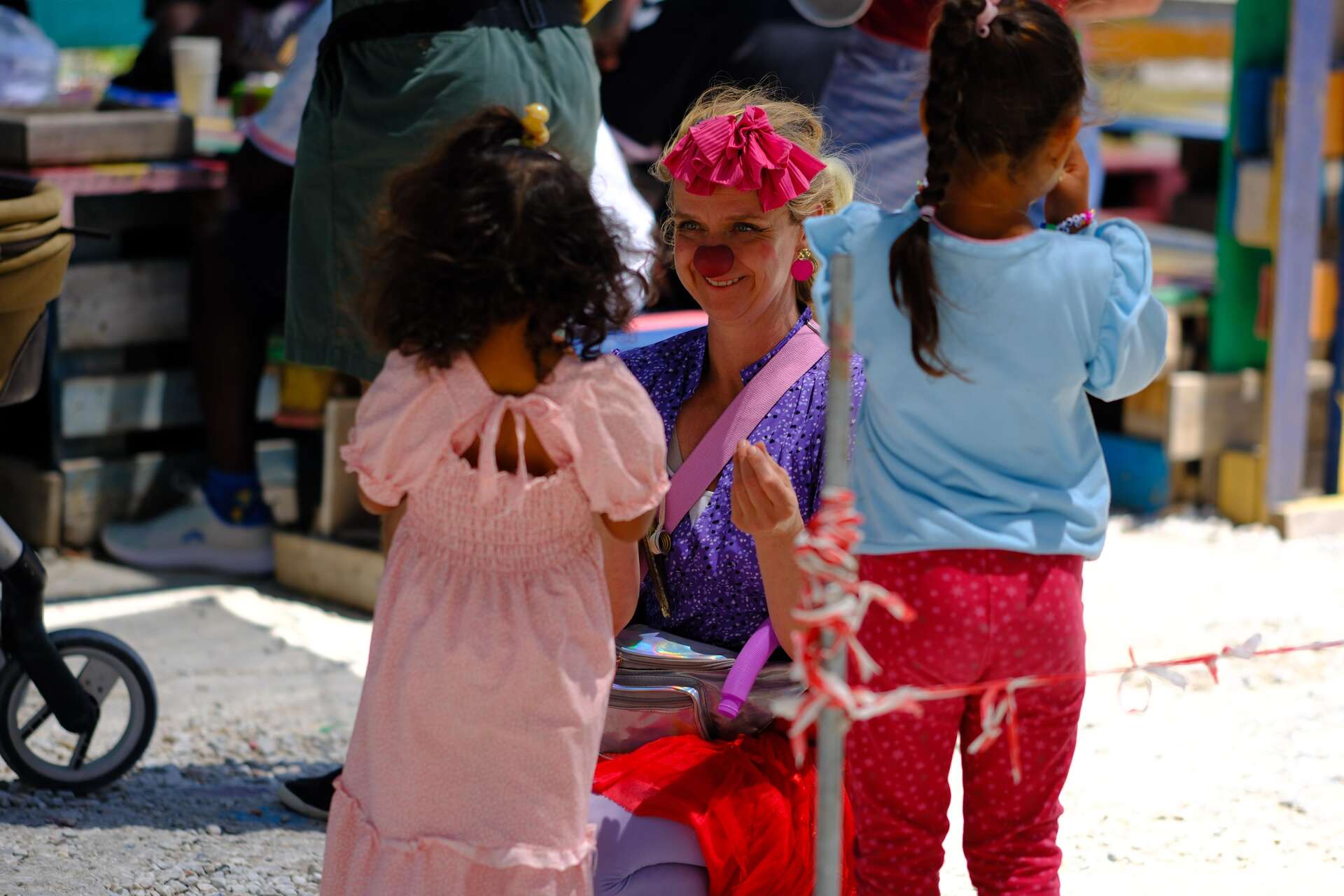
Emergency Smile returned to Lesvos four times this year. Children and young people living in camps on the island face ongoing stress and uncertainty, with few predictable routines or familiar faces.
For one of the artists, Zuzana, the experience showcased both the resilience of the children and the specific function of healthcare clowning in crisis settings:
‘I realised how much strength they carry within themselves and how clowns can turn an ordinary place into a safe one, and time into something that allows you to forget, even briefly.’
These repeated engagements in Lesvos demonstrate how continuity and familiarity, core principles in community-based psychosocial support, can create moments of relief, connection and regulated social interaction for displaced children and youth.
 Enlarge photo
Emergency Smile mission in Lesvos 2025
Türkiye
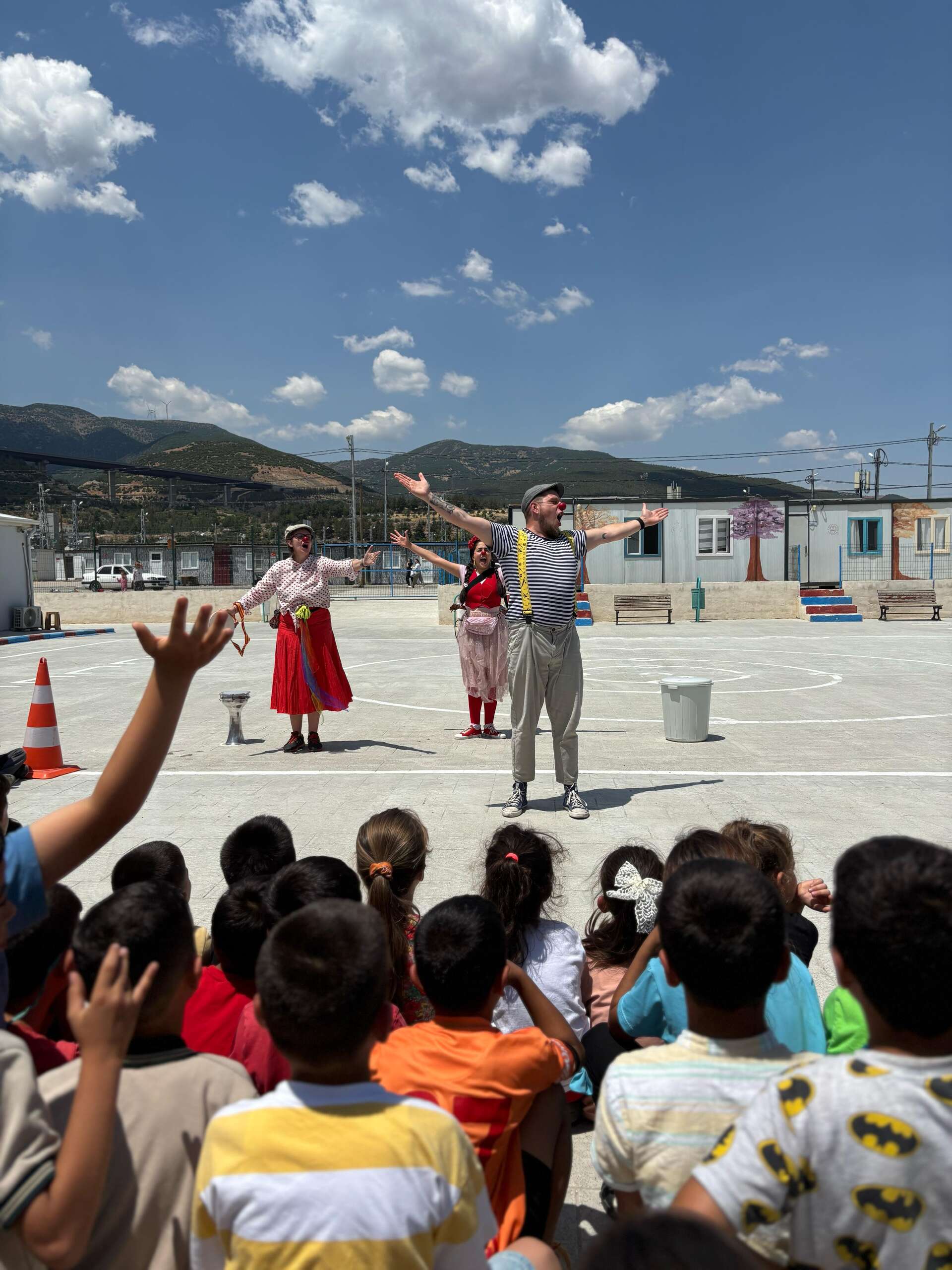
In Türkiye, Emergency Smile implemented two missions focused on communities still rebuilding after the 2023 earthquakes, where many families continue to live in container camps and other forms of temporary shelter.
Research on post-earthquake contexts shows that children exposed to major seismic events have significantly elevated rates of acute stress reactions, post-traumatic stress disorder (PTSD), anxiety, and behavioural disturbances compared with children experiencing other life-threatening traumas, and these reactions are often intensified when displacement disrupts daily life and sleep patterns.
The interventions used healthcare clowning and structured play to support emotional expression and regulation, particularly effective for children who struggle to articulate their experiences verbally.
During the second mission, one moment illustrated this need clearly. A child approached one of the clown artists, Nina, and said, ‘Please make us laugh a lot today.’ The request reflected a desire for relief within a context of prolonged strain. Performances were delivered in both Turkish and Arabic, ensuring accessibility and enabling all children to participate fully.
 Enlarge photo
Emergency Smile Clown Show in a primary school inside one of the Nurdağı container cities
Mozambique
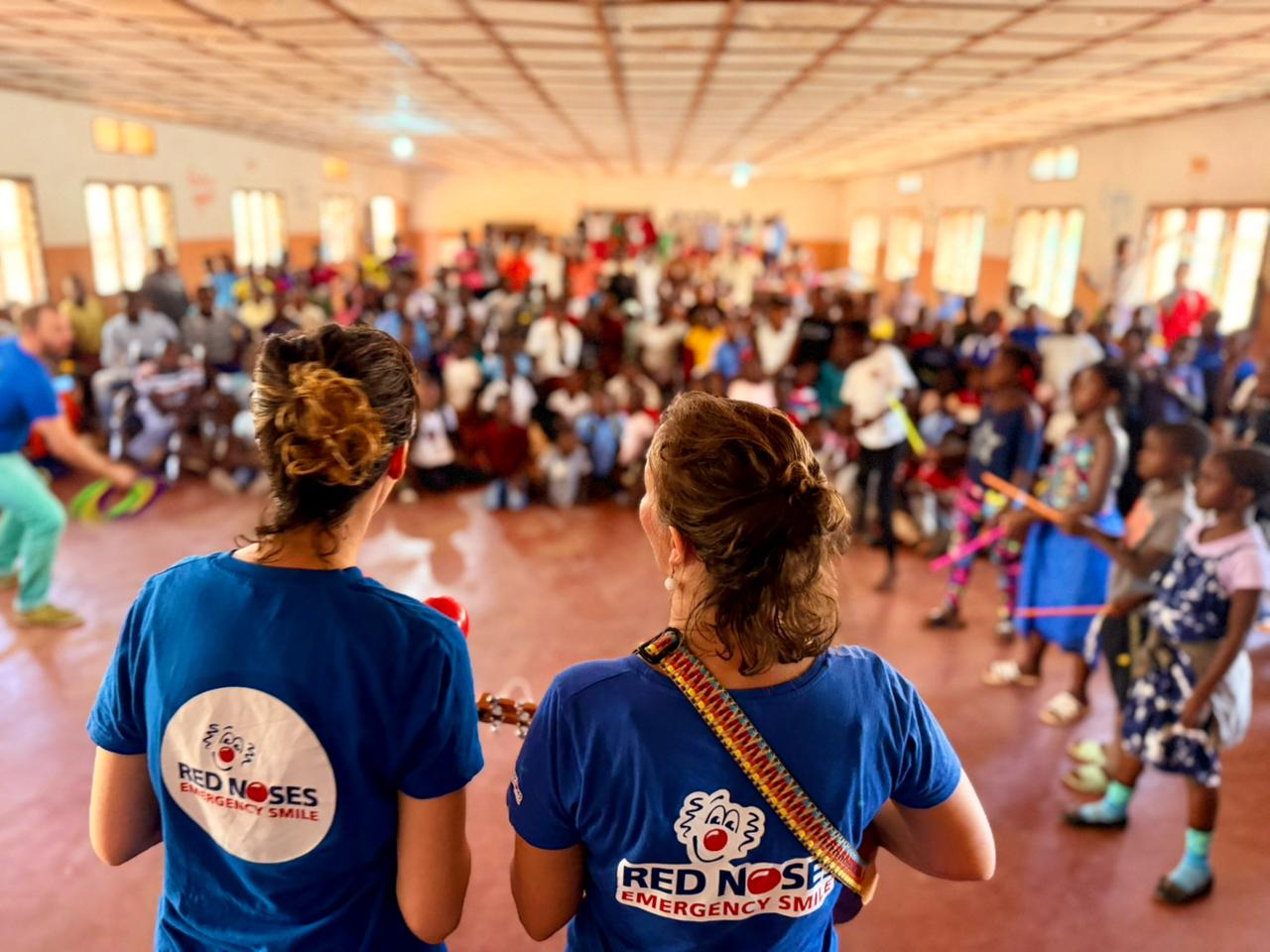
In collaboration with Light for the World, Emergency Smile implemented a four-week project in Sofala Province, Mozambique, integrating humour, artistic expression, and creative play to support gender equity and disability inclusion in schools, hospitals, and community spaces. The mission formed part of the InPower programme, which aims to empower communities to challenge restrictive gender norms and disability stereotypes through participatory activities and psychosocial support.
This collaborative approach highlights how art-based psychosocial interventions can support inclusion and challenge entrenched stereotypes, while also strengthening local networks and reinforcing community-owned strategies for equity and participation.
* Funded by the Austrian Development Agency
 Enlarge photo
Emergency Smile and Circus Smile at ESMABAMA school in Mangunde, Mozambique
Investing in the future
Psychosocial support must continue to evolve, and so do we. This year, the International School of Humour hosted two incredible workshops tailored for the Emergency Smile team members:
- Ale Duarte in March, exploring connection and trauma-sensitive care.
- Lory Leshin in October, strengthening artistic resilience and supportive group dynamics.
Investing in our artists means investing in the wellbeing of every child they meet.
Looking forward with hearts full
Thanks to our dedicated partners, fearless artists and supporters around the world, Emergency Smile will continue to show up wherever the need for joy is greatest.
And stepping into 2026, we invite you to be part of this journey. Every contribution, big or small, helps us bring moments of relief, connection and joy to people living through uncertainty.
Share the gift of laughter this year. Your support helps us reach thousands with hope, human connection and a reason to smile.