#MeetTheArtist: Vladislav Kos
Meet Rudolf, or Rudolfino, depending on the day. An older clown who dances, drums and pokes his nose into absolutely everything. For Vladislav Kos, the red nose isn't a costume. It's a kind of permission to be fearless, playful and completely honest. Sixteen years in, he still means it!
 Enlarge photo
Who is your clown character?
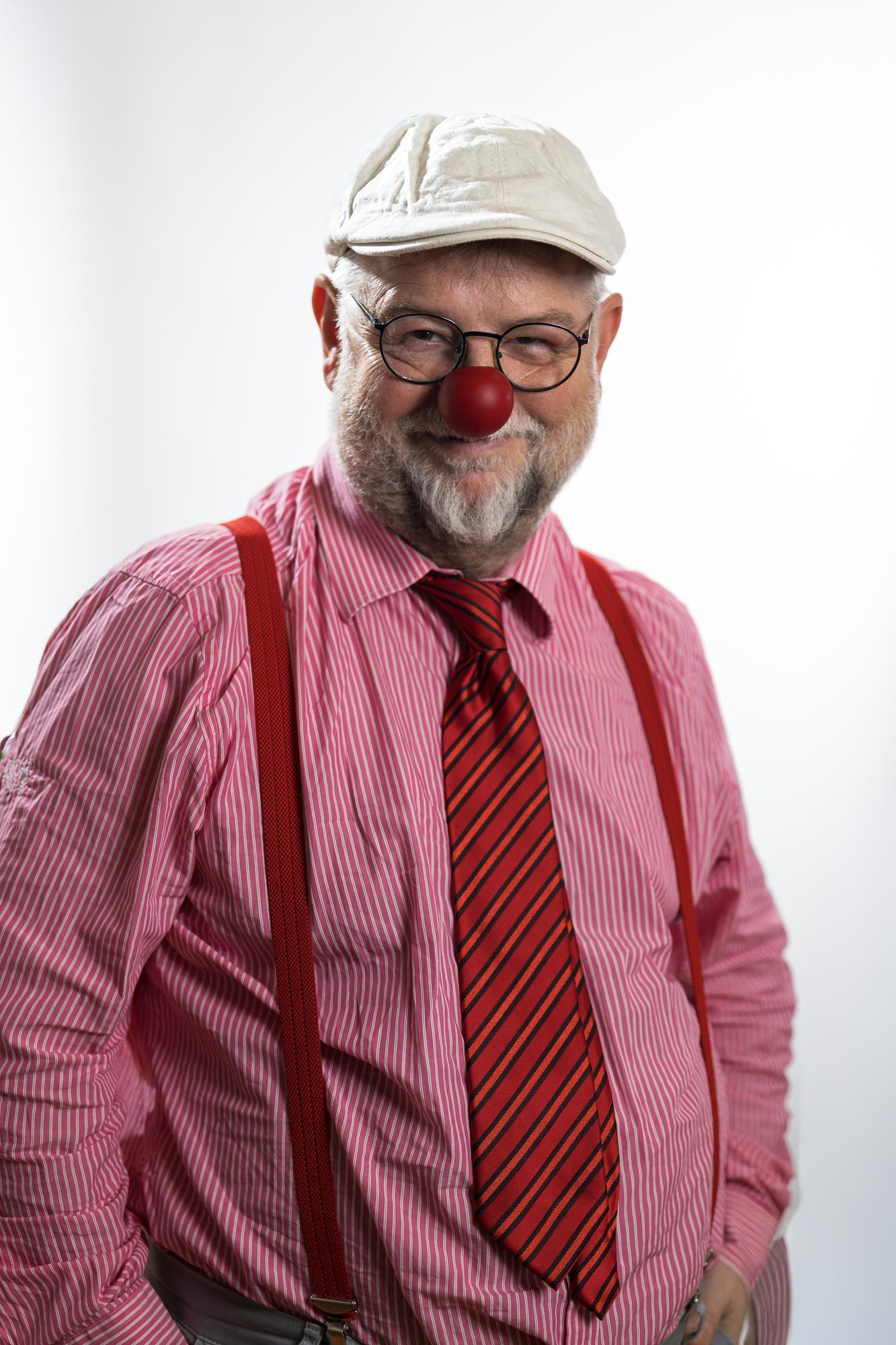
My clown is called Rudolf, or sometimes Rudolfino. He was born from a character I developed in a geriatric clowning programme in the Czech Republic.
Rudolf is an older, chubby clown who loves dancing, music and having fun with everyone he meets. He is endlessly curious. He wants to touch everything, try everything and is convinced he can do almost anything—even when he clearly can't!
He has a habit of sticking his nose into everything, which often leads to funny accidents and unexpected situations. But Rudolf never sees these as failures. For him, every mistake is simply another adventure, another chance to discover something new. His curiosity and optimism are always bigger than his fear of getting things wrong.
Why did you choose this character, and what are his superpowers?
I chose Rudolf because he is, in many ways, an exaggerated version of myself—a little crazier, wilder and much more open than I am in everyday life. The red nose gives him permission to do things most people would never dare to do. It allows him to ignore the invisible rules that usually guide our behaviour.
His greatest superpower is courage. Whatever he does, he does with 1000% commitment. He is convinced he is an amazing dancer, a fantastic drummer, capable of absolutely anything. If he walks into a closed door, he won't give up—he'll keep trying until, in his mind, the door finally decides to let him through. And somehow, that confidence makes everyone around him believe it too.
How do you prepare for your work?
I don't have a fixed routine. My preparation comes from more than 20 years of improvisational theatre, where I learned that being fully present in the moment is the most important thing.
Before I begin, I try to open myself to whatever is happening around me. I pay attention to the people I'll meet—their faces, their emotions, the atmosphere in the room. Even whether it's hot, cold or windy. All of these things influence how I prepare.
Even when we have a planned performance, connecting with the people in front of us is always more important than following the script. Every encounter is unique.
What impact do you hope to have?
I want to bring moments of genuine joy, connection and laughter to the people I meet. I want children to experience simple, honest happiness—even for just a few minutes. Children are the same everywhere in the world. They need moments of play, imagination and laughter, because these become part of who they are.
I believe laughter gives us strength. Being able to laugh at ourselves instead of taking everything too seriously makes us more resilient, more connected, and, in many ways, freer. This feels especially important for children and young people who have experienced war, loss or displacement. Humour can't take away their pain—but it can create a moment where they can breathe, smile and simply be children again.
I don't think a healthcare clown artist can solve people's problems. But I do believe we can remind someone—even if only for a few minutes—that they are more than their problems.
How do you stay motivated during challenging situations?
What motivates me is the immediate reaction. Seeing that we have brought joy and relief to people—that is probably the greatest motivation there is.
Of course, there is physical and sometimes emotional fatigue in this work. But there is also an incredible inner energy that comes from the people around us. This work gives my life a deep sense of meaning. The joy we bring to others has a wonderful way of coming back to us.


Does Rudolf show up in your everyday life?
Yes, definitely. It happens quite regularly that I find myself making people smile or laugh without really planning it—often in slightly embarrassing situations. But embarrassment is, in a way, clown food.
Recently, I was trying to ride a paddleboard and fell into the water several times. At some point Rudolf just woke up, and I started making fun of the whole situation—of myself falling in, of trying to climb back up. Later on the beach, a woman stopped me and said: 'It was fun to watch you.'
So yes, Rudolf is always there.
Why does clowning make sense in a crisis setting?
Crisis situations are not short moments for the people we meet. They often last weeks, months, sometimes years. In these settings, we try to remind people that this period is just one stage of their life and humour belongs to every stage.
People in these situations often don't have many reasons to laugh. We try to remind them that laughter is still here. We show different ways of looking at things—small moments where it is still possible to smile. I believe that can give people the energy to get through what they are facing.
What inspired you to become a healthcare clown artist?
A colleague from my improvisational theatre company told us it was the most beautiful job he had ever done. There was an open audition, so I decided to apply.
Sixteen years later, I can honestly say the same.
It really fits my personality. I have always had some difficulty memorising things. In clowning, the ability to react to the situation matters far more than delivering a perfect, mistake-free performance. We go to the people—they didn't choose to come to our show. They are not in a theatre. We enter their environment.
Can you share a moment when you felt your work had a lasting impact?
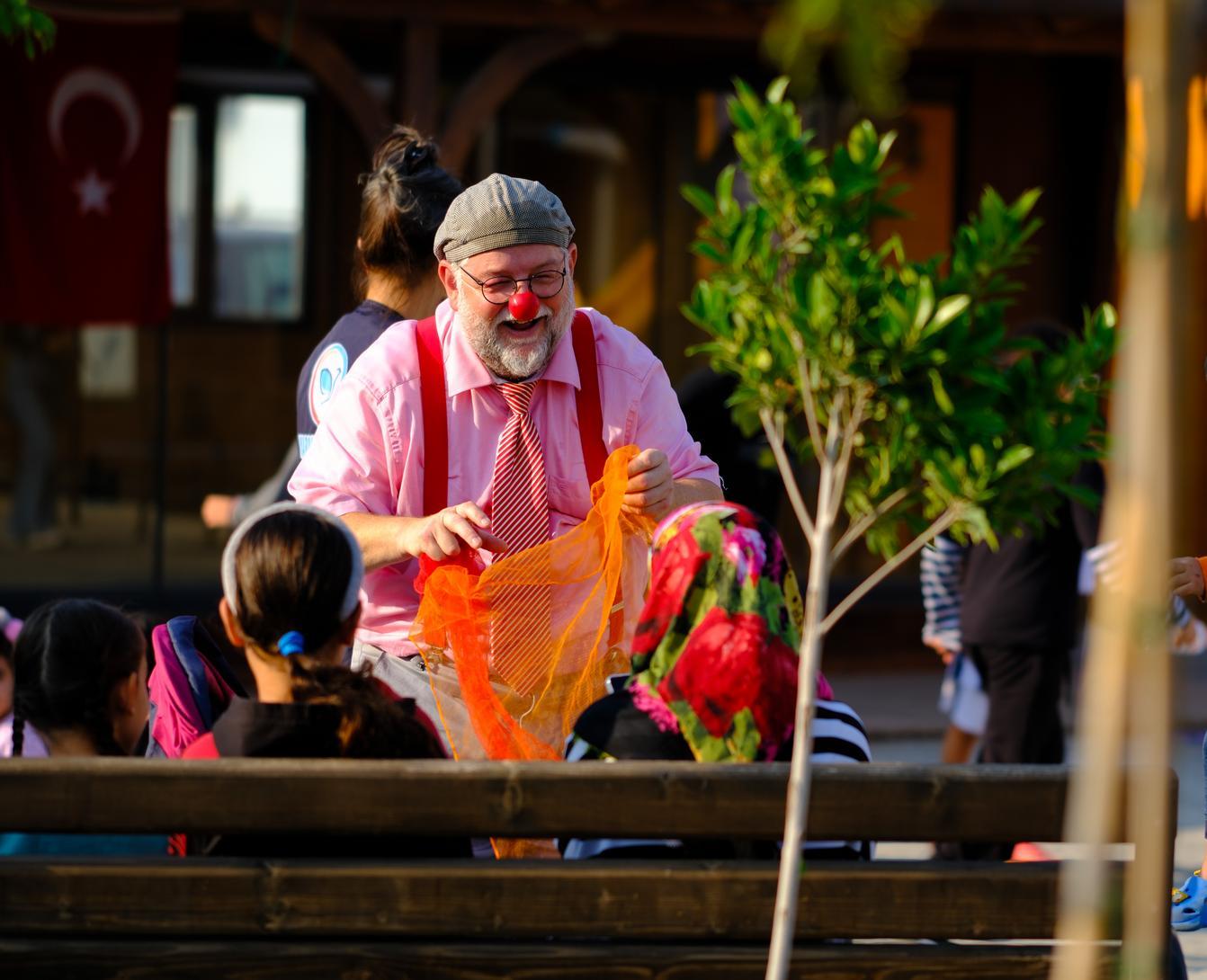
We received very strong feedback from a home for young people aged around 15 to 18. They had come from different countries and barely communicated with each other—no shared language, no common ground. Over three visits, something shifted. They began to communicate, laugh, dance and spend time together. The staff remarked on how quickly that connection happened and how the group started to function as one.
One more thing I have been realising more and more: it is not so important what you do, but how you do it. On one visit, we performed the same show for different age groups—from children aged 2 to 5, all the way to young people aged 15 to 18. We adapted the way we played it so each group could enjoy it in their own way. But the message was the same throughout: never give up.
 Enlarge photo