What children on the move need: a conversation with Project Play
This World Refugee Day, as the world marks 75 years of the 1951 Refugee Convention under the theme 'Until everyone is safe', we find ourselves asking: what does safety actually look like for a child? Beyond shelter and food—what does a child need to grow, to heal, to simply be a child?
For Project Play, an organisation working with children on the move at the UK-France border, the answer is clear: play. Not as a reward for stability, but as a condition of it.
We sat down with their team to talk about what they see every day in northern France, what happened when RED NOSES healthcare clown artists visited, and why the right to play is inseparable from the right to protection.
- Project Play works in one of Europe's most visible—and most difficult—border contexts. What does a typical day look like for your team working with communities in northern France?
Our team starts the day with a morning meeting, to check in on the plans for the day ahead and to review any feedback from our sessions the day before—including any specific support we might want to put in place for children we might see again, or the centres where we work.
Then, we get to prep—getting our resources and materials ready for the sessions we're running that afternoon. Our team works from a warehouse with other organisations, and our lunch breaks are an opportunity to spend time with this community.
 Enlarge photo
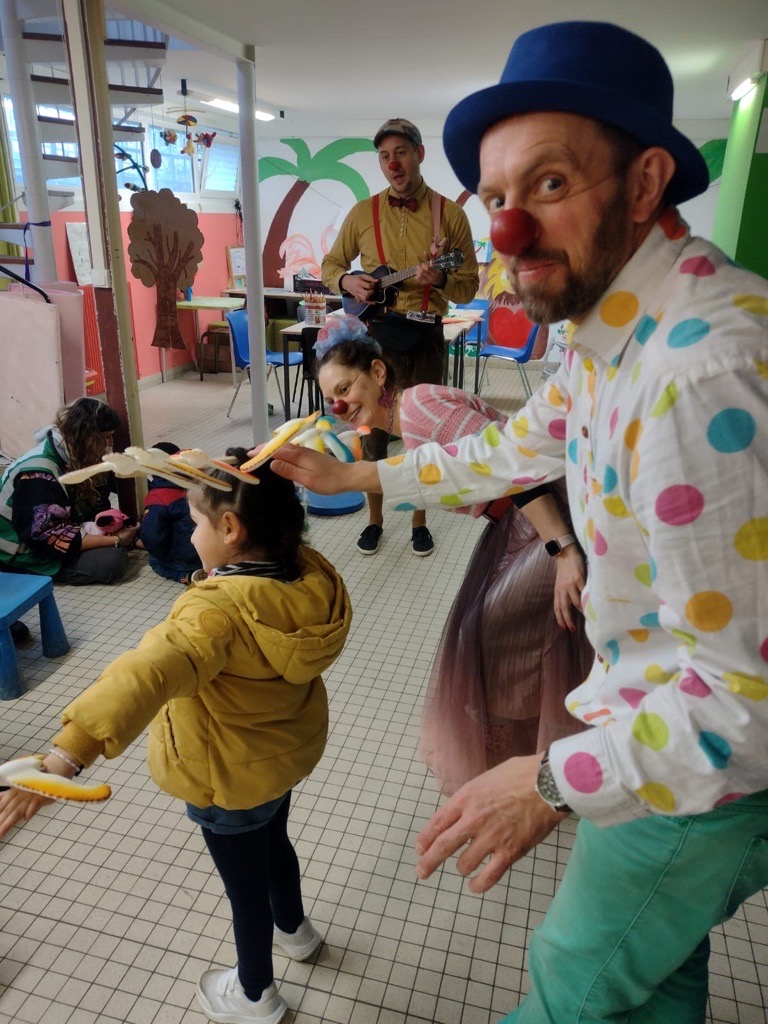
In the afternoon, it's session time. We run one or two sessions a day, in informal living sites, as well as independent day centres and safe houses. We start our sessions with a group circle, with silly songs and games, to foster community, social skills and self-expression. The rest of our sessions centre child-led free play, alongside one or two more structured activities to support children to develop the key skills they miss out on whilst denied access to education. These are themed, and can range from circus games to crafting homemade slime, alien spaceships and dinosaur masks. Following this, the team heads back to the warehouse for a debrief to reflect on the day's activities, as well as any vulnerabilities or safeguarding concerns that may be relevant to our work in child protection and advocacy.
- Play is sometimes seen as a luxury. How do you make the case that it's essential, not optional, for children on the move?
Play is essential to child development because it is through play that children learn to think creatively, solve problems, build relationships, and regulate their emotions. Neuroscientific and evolutionary data shows play is a biological necessity for survival and growth. Far from being a distraction from learning, play is one of the primary ways children develop cognitive, social, and emotional skills.
- When RED NOSES healthcare clown artists joined your team to run activities with children, what did you notice? Was there something the clowning brought that surprised you?
Most children love anything new and exciting, and the joy and wonder RED NOSES healthcare clown artists invite is something every child deserves to experience! In particular, it has been great to see more shy or introverted children come out of their shell and step into the world of wonder that they can create.
- How did the children respond? Were there moments that have stayed with you?
With a lot of curiosity, excitement and laughter! It is always amazing to see the confidence some children show, completely unafraid to get up on stage and show the healthcare clown artists how it's done!
- Play, humour, and artistic expression can each reach people in different ways. From where you sit, what do they share—and where does each one do something the other can't?
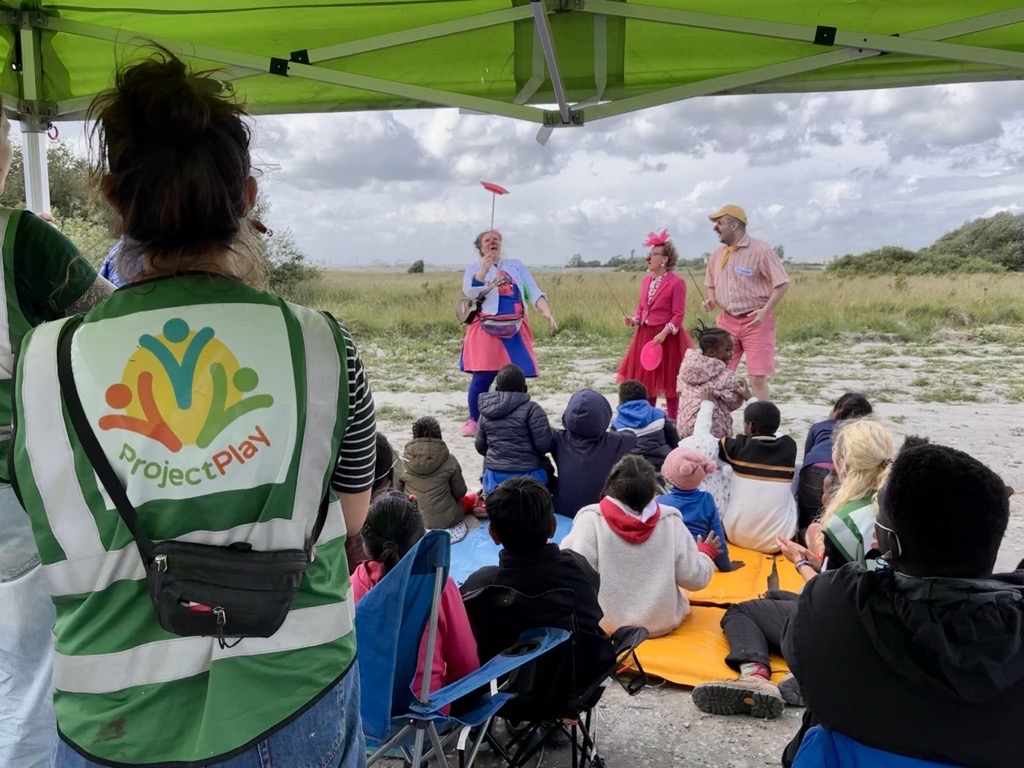
Play, humour, and artistic expression all help both adults and children connect and make sense of their experiences in ways that go beyond words—they are incredibly powerful tools for bridging and reimagining worlds. Humour and play in particular can really break down barriers, creating a shared understanding as well as encouraging social exploration and understanding one another's limits. Artistic expression, on the other hand, permits a more internal, individual journey, both calming and empowering, allowing children to convey emotions and ideas that may be difficult to express otherwise.
 Enlarge photo
- What would you want someone who has never heard of Project Play to understand about the lives of children at the UK–France border right now?
Firstly, that there are a lot more children than people often expect. On sessions in the living sites near Dunkirk, we can see around 40–50 children and babies in just one afternoon. Children at the UK-France border are routinely exposed to violence, including waking up to police evictions multiple times a week, the destruction of their tents, sleeping bags and belongings, as well as having no access to shelter, food, water or support beyond that provided by grassroots organisations. All children deserve and are entitled to protection—yet the decisions made by both France and the UK create deliberate instability, denying children access to essential support and placing them in acutely vulnerable situations.
People coming from the UK are often also surprised to know that violence and securitisation at the border is funded in no small part by UK taxpayers, with hundreds of billions of pounds spent by the UK government on violent enforcement action. We have worked with children as young as two months old who have been tear-gassed by police during crossing attempts. UK funding has also been linked to a dramatic increase in child fatalities, with 22 children killed at the border in 2024 and 2025.
Yet simultaneously, the UK government has continuously restricted safe routes for people—including children and families—to access protection. This creates a system in which public money is used to strip people of safe routes to asylum and protection, and instead meet them with violence. We think this is something the UK public deserve to know, and have the opportunity to challenge—which is why we're currently running a campaign calling for an inquiry into the use of public funds for violence at the border.
- Working in this context, you witness children finding ways to laugh, play, and connect every day. Has that changed how you think about what children need—beyond the basics of food and shelter?
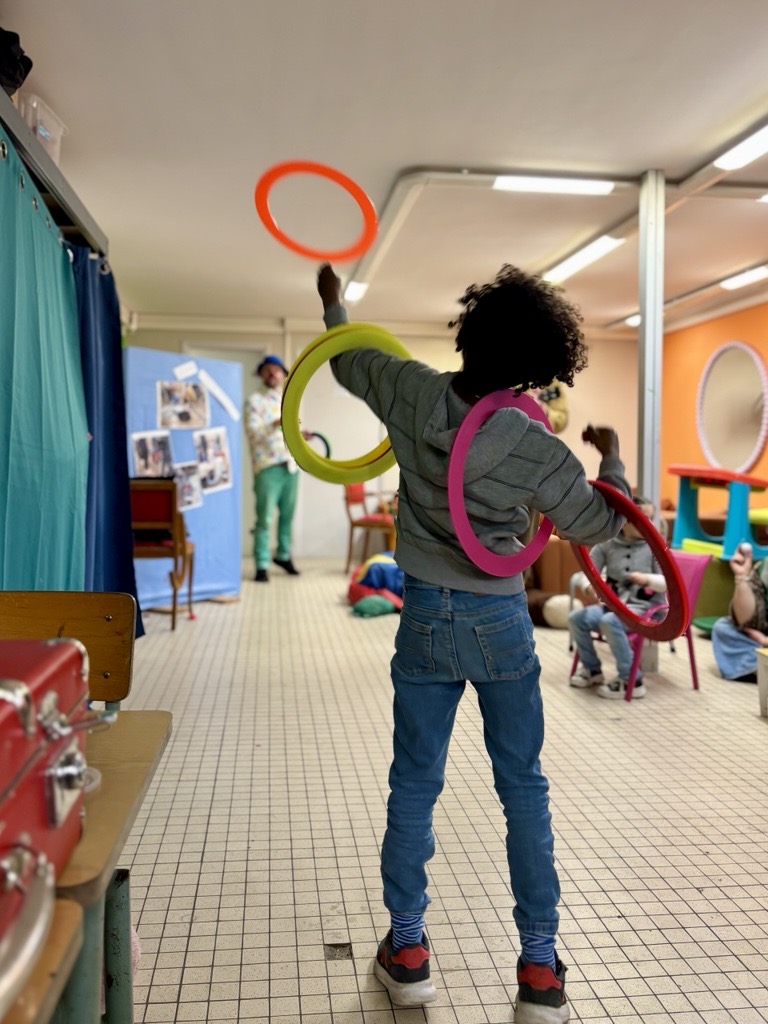
Play is fundamental to child development, helping children build cognitive, social, emotional, and motor skills. Through play, children develop problem-solving abilities, confidence, creativity and resilience whilst learning about the world around them. It is beautiful to see how quickly children learn and grow, and using the fun, safe and explorative space of a play session has been an amazing way to see this in action.
 Enlarge photo
Project Play is an independent organisation working with children on the move in northern France. The right to play is enshrined in the UN Convention of the Rights of a Child — yet for too many children experiencing forced displacement, it remains out of reach. RED NOSES International's Humanitarian Response Programme collaborates with local partners, like Project Play, to bring psychosocial support through art and humour to people experiencing forced displacement across Europe and beyond. We firmly believe the right to joy is inseparable from the right to protection and play. Find out more about our Humanitarian Response Programme.