




Mission Report: the last two missions in Lesvos in 2025
In 2025, Emergency Smile carried out two final missions in Lesvos, one in September and one at the end of October. Together, they concluded Emergency Smile’s missions in Lesvos for 2025, reflecting the organisation’s regular return to the island year after year.
The missions brought together a diverse team of experienced clown artists, including some taking part in their first Emergency Smile mission in Lesvos.
September mission: learning the rhythm of a mission
The September mission was led by Head of Mission Craig, together with clown artists Arman, Christine and Majka. For Arman and Christine, it was their first Emergency Smile mission.
The team worked in different settings, including the Paréa Community Centre, the Iliaktida Disability Centre, and a safe area for unaccompanied minors. Each place required a different approach and a high level of sensitivity.
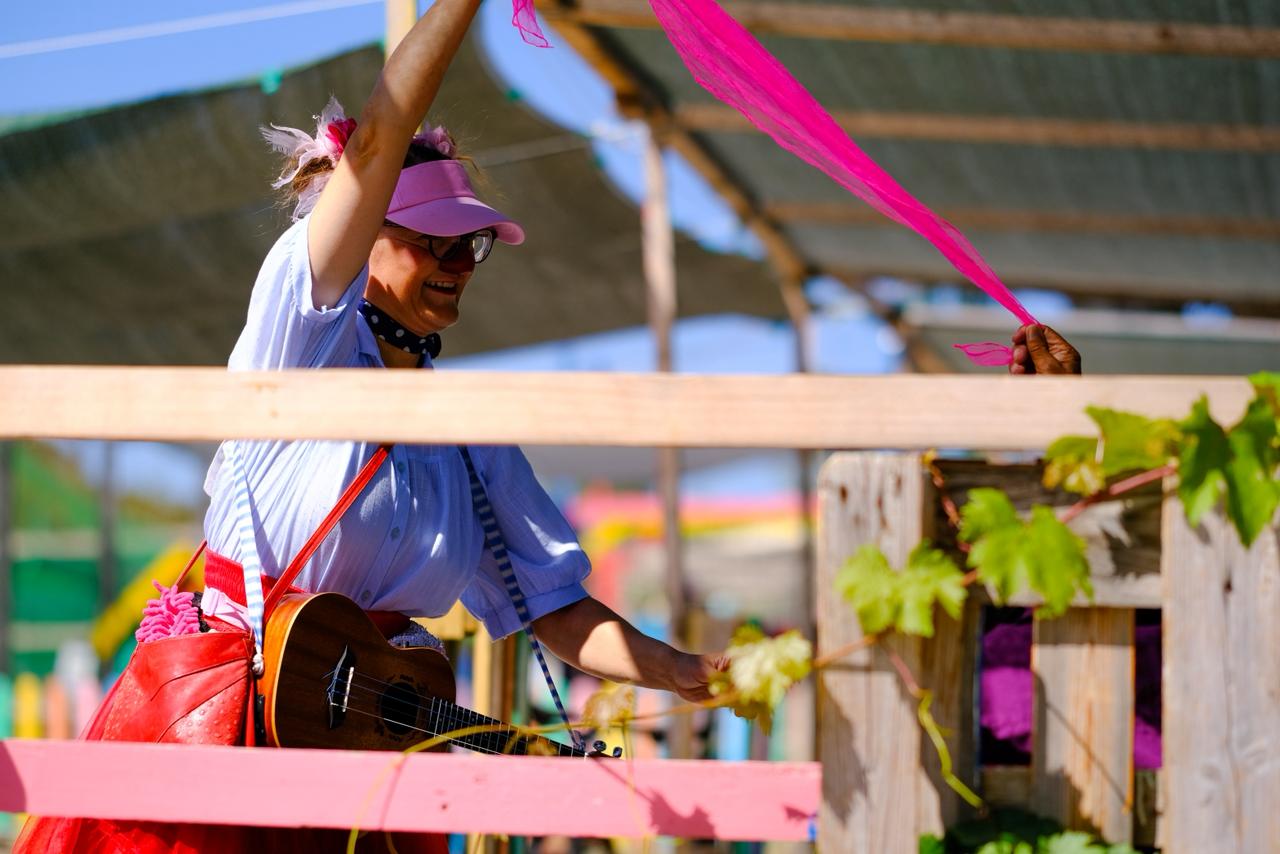
Christine was responsible for music during the mission, playing the ukulele and singing.
“When you don’t share the same language or culture, music really helps. It builds bridges. It’s such a universal language.”
 Enlarge photo
Paréa Community Centre, Emergency Smile building community
What stayed with her most were the simplest, most human moments.
“People and children were so grateful and joyful. There was so much dignity. Small gestures can change everything. It’s about spending time together, playing, dancing, just being present.”
Emergency Smile work differs in many ways from hospital clowning. In hospitals, or other highly regulated environments, clowning often plays with rules in a gentle and reassuring way to open space for imagination and relief. For a child facing surgery or a strict medical treatment, this playful shift in perspective can reduce fear and restore a sense of agency.
Working in an Emergency Smile mission is different.
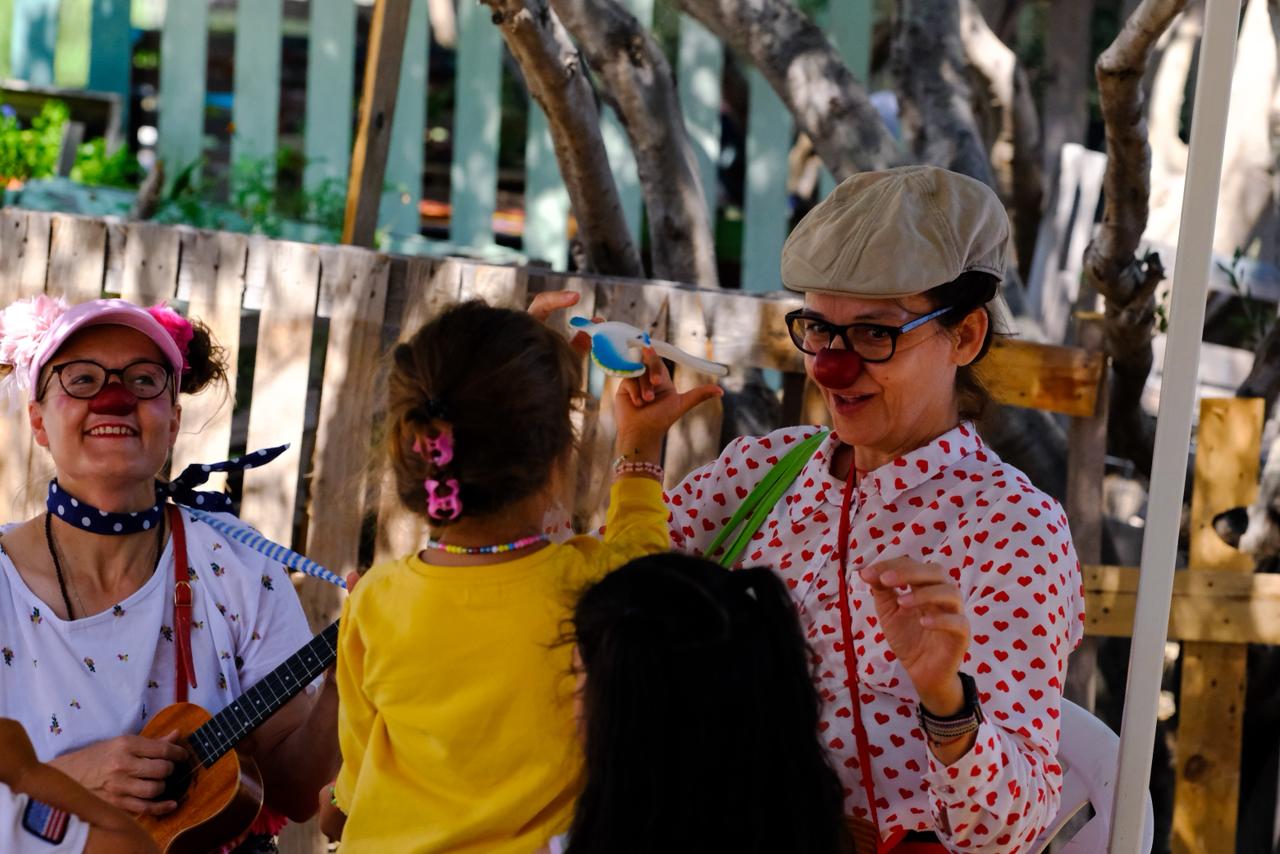
“During an Emergency Smile mission, you work with traumatised people. You can’t simply challenge structures or create disruption, that could add to the chaos they are already experiencing. What’s needed instead is calmness and structure. You need to show that people can feel safe and rebuild trust.”
 Enlarge photo
Paréa Community Centre, Emergency Smile building community
For Arman, the mission had a deep personal impact.
“I don’t think I can describe my feelings about the mission in a few sentences, not even in an hour! It was probably one of the richest months emotionally I’ve had in a long time, in a very positive way.”
He reflects on how shared games became part of daily life.
“So many beautiful games were created and repeated with people, and on other days they would bring their friends to join in. I feel much calmer in my life now and complain much less.”
Arman also connected theory with practice in the field.
“Many things I learned during workshops with Ale Duarte, I could see in real life, right in front of me, recognising where children were in their regulation cycle, how to help them complete it and come back to a place of safety.”
October mission: familiar faces and growing trust
The second mission, at the end of October, was led by Salomé, with clown artists Marko, Vladislav and Zuzana, for whom this was her first Emergency Smile mission.
A large part of the mission focused on working with unaccompanied minors, particularly in a safe area where young people stay shortly after arriving on the island. The team met a fairly stable group of around thirty teenagers, mostly aged around sixteen, coming from countries such as Somalia, Afghanistan, Egypt and Syria.
The mission started with a clown show, followed by several Circus Smile sessions, using games, music and circus props. Music worked especially well with this energetic group. Seeing the clowns return regularly helped the teenagers connect with each other.
Some young people, especially girls, slowly began to open up. One girl who initially only observed later joined the activities with enthusiasm. Staff shared that they had rarely seen the girls participate so actively.
The team also visited several Iliaktida shelters for unaccompanied minors, including shelters for teenage boys aged fifteen to seventeen, and one shelter for girls and younger boys. While some teenagers were hesitant at first, they relaxed during the shows and actively joined the Circus Smile sessions afterwards. These moments allowed them to play together and, for a short time, to reconnect with playfulness and lightness.
Beyond shelters, the artists returned several times to the Paréa Community Centre, interacting with hundreds of visitors through music, games and spontaneous jam sessions. These moments brought relief not only to visitors, but also to staff working in a demanding environment.
 Enlarge photo
Paréa Community Centre, Emergency Smile
The team also organised activities at the Iliaktida Disability Centre for local adults, where the atmosphere was consistently warm and festive, supported closely by the staff.
Supporting humanitarian workers
During this mission, The RED NOSES Emergency Smile Research Project exploring the impact of healthcare clowning in Lesvos also began. As part of this, the team facilitated several Humor Relief Workshops for humanitarian aid workers from different organisations on the island.
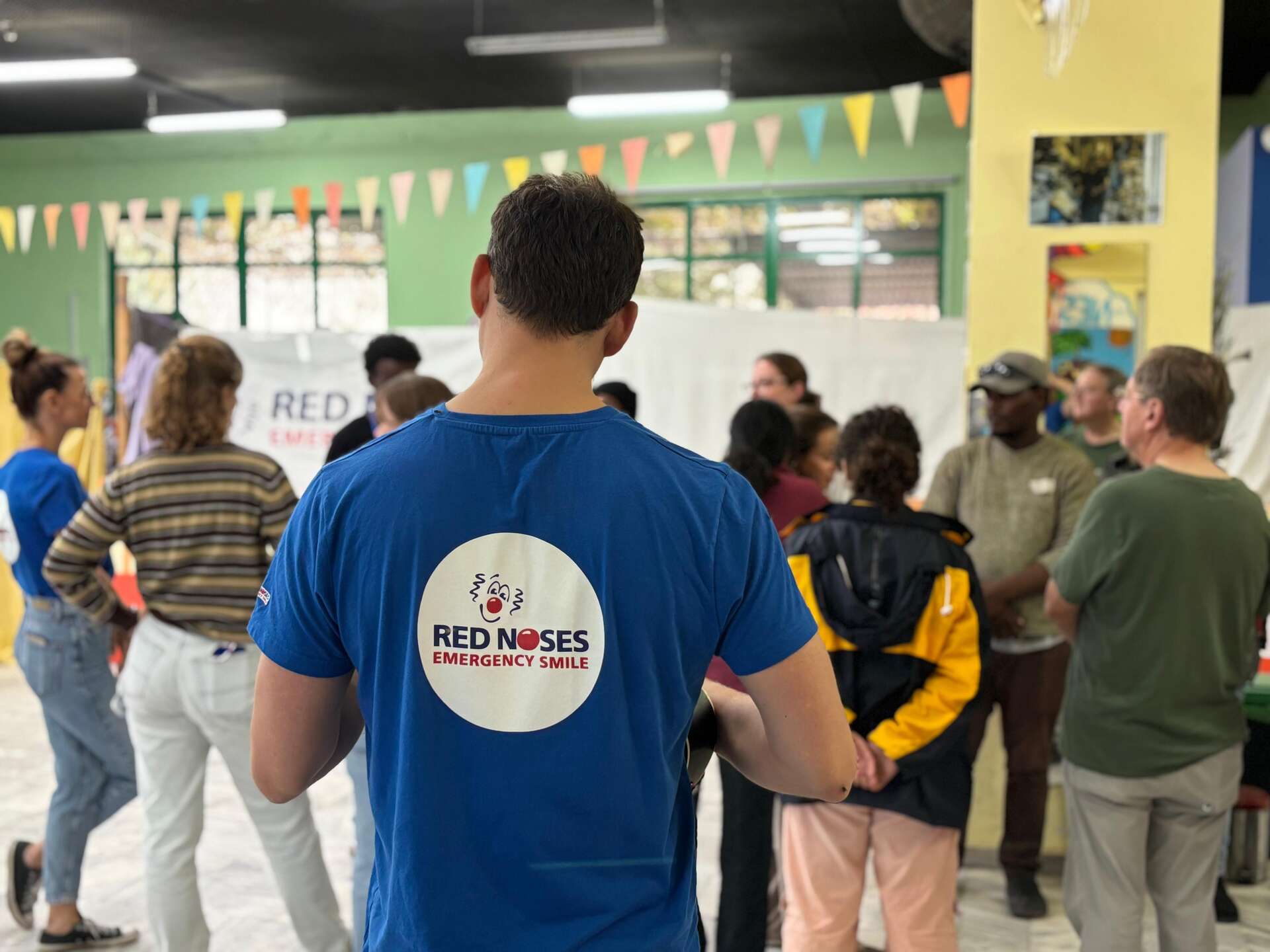
At a time of increased arrivals and pressure on services, these workshops offered space to pause, reconnect as teams and release stress. Through play, shared laughter and moments of appreciation, participants were able to strengthen trust and team bonds.
 Enlarge photo
Compliment tunnel during a Humour Relief Workshop
Context and reality
At the end of October, arrivals by sea increased, and the camp population grew to over 1,000 people. During this period, several boats collapsed or sank at sea, often with children on board. Some people Emergency Smile worked with had survived shipwrecks or lost family members.
People on the island continue to come from many different countries, including Afghanistan, Somalia, Syria, Sudan, Egypt, Eritrea and Cameroon. The situation remains fragile and deeply challenging.
A first mission, a lasting impression
For Zuzana, this first Emergency Smile mission was marked by trust and teamwork.
“I felt great support and a huge amount of trust from my colleagues. That was the base for everything we passed on to the people we met.”
Meeting unaccompanied minors left a strong impact on her.
“I realised how much strength they carry within themselves—and how clowns can turn an ordinary place into a safe one, and time into something that allows you to forget, even briefly.”
These final missions of 2025 in Lesvos once again showed how small moments of play, presence and trust can make a difference—even in the most difficult circumstances.
* The missions were partially funded by Alta Mane Foundation